How to Choose the Best T Shirt for Your Business Needs?
Choosing the right T Shirt for your business is crucial. It goes beyond just style; it reflects your brand identity. A well-chosen T Shirt can enhance visibility and create a sense of unity among employees.
Consider the fabric type. Some materials breathe well, while others offer durability. Think about the printing method too. Screen printing can create vibrant designs, but it's not always the best choice for small runs. Your audience plays a significant role in this decision. Fashion-forward clients may prefer trendy cuts, while a more traditional crowd might appreciate classic styles.
One might feel tempted to focus solely on cost. However, sometimes, cheaper options lead to poor quality, which can affect your brand image. Remember to test samples before committing. It's essential to balance affordability and quality. Reflecting on these factors ensures your T Shirts meet business needs effectively.
Identifying Your Business Objectives for T-Shirt Selection
Identifying your business objectives is crucial when selecting the right t-shirt for your company. Are you looking for promotional apparel to strengthen your brand? Or do you need uniforms for your team? Understanding your goals can significantly streamline the selection process. Each objective demands different styles or materials, whether casual tees for a friendly vibe or high-quality fabric for a professional look.
Consider your target audience as well. Are they young professionals or outdoor enthusiasts? A clear picture of your audience helps in choosing colors, designs, and fits. This ensures your t-shirts resonate with those who will wear them. It’s important to reflect on whether the chosen design aligns with your brand identity. Sometimes, what seems trendy may not fit well with your overall image, leading to potential disconnects.
You might also want to assess your budget. The price can vary widely based on quality and volume. Balancing cost and quality is not easy. You may need to compromise on certain aspects. Regularly revisiting your objectives can help refine future choices. Aim for a t-shirt that not only meets current needs but also adapts as your business grows.
Assessing Fabric Types and Their Suitability for Your Brand
Choosing the right fabric for your business t-shirts is crucial. Fabrics can significantly affect comfort, durability, and the overall impression of your brand. Cotton is a popular choice due to its breathability and softness. However, it may not be the best option for every situation. For outdoor events, a moisture-wicking fabric could be more suitable. This choice keeps the wearer dry and comfortable, enhancing brand visibility.
Polyester blends offer a different advantage. They are often more durable and resistant to wrinkles. This makes them ideal for long-term use. However, some people might find synthetic fabrics less comfortable than natural ones. It’s essential to weigh comfort against durability and performance. Additionally, consider the environmental impact of your fabric choices. Eco-friendly materials can appeal to a more conscientious consumer base.
It’s essential to test different fabric types. Get samples and see how they handle printing and washing. Take note of how each fabric feels after a wash. Do colors fade? Does the fabric retain its shape? These small details can inform your decision. Make sure you prioritize quality and usability, even if it means going back to the drawing board. The right choice enhances your brand identity and customer satisfaction.
How to Choose the Best T Shirt for Your Business Needs? - Assessing Fabric Types and Their Suitability for Your Brand
| Fabric Type |
Comfort Level |
Durability |
Price Range |
Best For |
| Cotton |
High |
Medium |
Low to Medium |
Casual Wear, Promotions |
| Polyester |
Medium |
High |
Low |
Sportswear, Activewear |
| Blends (Cotton-Polyester) |
High |
Medium to High |
Medium |
All-purpose, Custom Prints |
| Bamboo |
High |
Medium |
Medium to High |
Eco-friendly Brands, Casual |
| Hemp |
Medium |
High |
Medium to High |
Sustainable Brands, Lifestyle |
Evaluating T-Shirt Styles and Cuts for Target Audience Appeal
When selecting t-shirt styles and cuts, understanding your target audience is crucial. The fabric and fit can significantly impact their buying decisions. A survey indicates that 70% of consumers prefer a relaxed fit for comfort. For instance, unisex styles often appeal to a wider demographic. In contrast, a tailored cut might attract a more fashion-conscious audience.
Consider the age group you are targeting. Younger audiences, aged 18-24, gravitate towards trendy designs with bold graphics. Meanwhile, older consumers often favor classic styles in neutral colors. A report from the Apparel Marketing Association suggests that 65% of customers feel emotionally connected to brands that reflect their personal style. Therefore, knowing your audience's preferences can help refine your selections.
Moreover, sustainability is becoming increasingly important. Data shows that 50% of shoppers prioritize eco-friendly fabrics. This shift means businesses need to explore options beyond traditional cotton. Encourage environmentally responsible choices and highlight this value in your marketing. Yet, be careful not to overpromise on sustainability, as transparency is vital for maintaining trust. Addressing these factors thoughtfully can create a compelling t-shirt line that resonates with your audience.
Understanding Printing Techniques and Their Impact on Design Quality
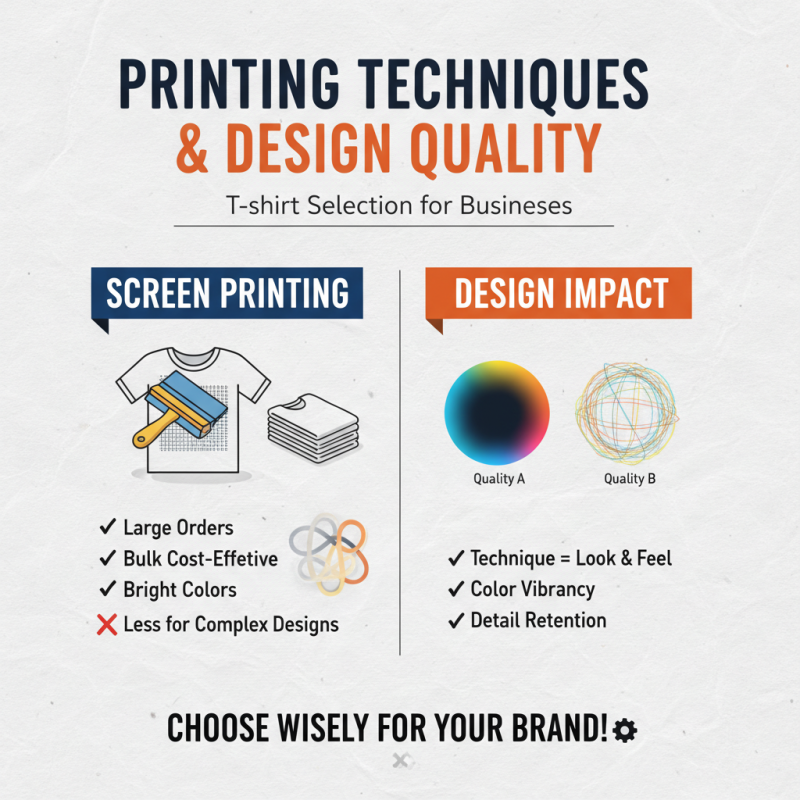
When selecting a T-shirt for your business, understanding different printing techniques is crucial. Each method affects how designs look and feel on the fabric. Screen printing is a popular choice for large orders. It produces vibrant colors and is cost-effective for bulk quantities. However, it may not be ideal for complex designs, as details can get lost in the process.
Digital printing, on the other hand, offers remarkable precision. It captures intricate details and works well for smaller runs. This technique can produce stunning visuals but may not always be as durable as screen printing. Consider the type of fabric too. Cotton holds ink better, while blends might offer comfort. Choosing the right combination impacts the final product's quality.
It's essential to weigh these options against your business goals. Are you focusing on large giveaways, or are you aiming for high-end retail items? Reflecting on your audience’s preferences may guide your choice. Quality printing techniques can elevate your brand image, but they also require careful consideration of costs and design limitations.
Determining Budget Considerations for Cost-Effective T-Shirt Choices
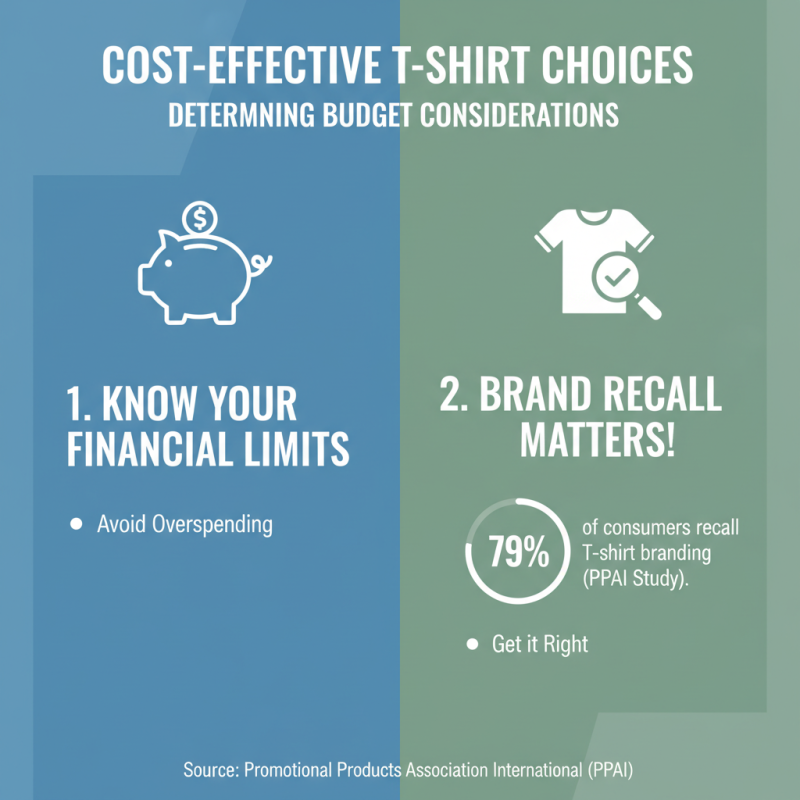
When determining budget considerations for cost-effective T-shirt choices, knowing your financial limits is vital. A study by the Promotional Products Association International revealed that about 79% of consumers can recall the branding on promotional T-shirts. This highlights the importance of getting it right without overspending.
It’s essential to find a balance between quality and cost. While a lower price may seem appealing, examining the fabric type and print durability is crucial. Reports indicate that businesses can save up to 30% by ordering in bulk. However, sacrificing quality can lead to dissatisfaction among customers.
Understanding the purpose of the T-shirts also plays a significant role in budget allocation. For events, promotional T-shirts should be appealing and comfortable. Yet, some companies underestimate the material choice's impact on overall expenses. Moreover, hidden costs can arise from poor-quality print jobs. Prioritizing long-lasting items can save money in the long run, making it clear that thoughtful decisions can prevent overspending.