In the realm of healthcare, where every detail can significantly impact patient outcomes, the importance of proper protective gear cannot be overstated. Among the various options available, latex sterilized surgical gloves stand out for their combination of durability and tactical functionality. These gloves are specifically designed to provide healthcare professionals with the utmost protection while ensuring dexterity and comfort during surgical procedures.
The Top 10 Benefits of Latex Sterilized Surgical Gloves encompass a range of advantages that enhance the safety and effectiveness of medical practices. Not only do these gloves offer a barrier against pathogens and infections, but they also contribute to a more efficient workflow in high-stress environments. Healthcare professionals rely on these gloves not only to safeguard their own health but also to protect their patients, making them an essential component of sterile technique.
As we delve into the numerous benefits provided by latex sterilized surgical gloves, it becomes clear that they play a vital role in maintaining hygiene standards and enabling healthcare professionals to perform their duties with confidence. Understanding these benefits will highlight the critical importance of selecting the appropriate surgical gloves in any clinical setting.

Latex sterilized surgical gloves are a paramount choice for healthcare professionals, particularly due to their enhanced barrier protection. This feature is crucial in minimizing the risk of transmission of pathogens during medical procedures. The snug fit and elasticity of latex gloves ensure that healthcare workers have optimal tactile sensitivity as they perform intricate tasks, allowing for precision and control.
Enhanced barrier protection against bloodborne pathogens and chemicals not only safeguards the healthcare provider but also protects patients, making these gloves essential in promoting safety and hygiene in a clinical environment.
When using latex surgical gloves, it is essential for healthcare workers to follow a few proactive tips. Firstly, always inspect gloves for any signs of damage or defects before use, as this can further compromise their barrier effectiveness. Secondly, proper donning and doffing techniques should be employed to avoid contamination—using techniques that minimize skin contact with the outer surface can significantly reduce the risk of infection. Finally, it is advisable to change gloves between procedures or when switching tasks to maintain a sterile environment, further emphasizing the importance of enhanced barrier protection in supporting overall health and safety in healthcare settings.

Latex sterilized surgical gloves have become an indispensable tool for healthcare professionals, particularly when it comes to enhancing comfort and flexibility during intricate procedures. The ergonomic design of these gloves allows for optimal dexterity, enabling surgeons and medical practitioners to perform delicate tasks with precision. According to a study published in the Journal of Healthcare Engineering, healthcare professionals reported a 35% increase in task efficiency when using gloves designed for superior fit and feel. This improved dexterity is crucial in environments where even minor mistakes can have significant ramifications.
Furthermore, the tactile sensitivity offered by latex gloves significantly impacts clinical outcomes. A survey conducted by the International Council of Nurses highlighted that 78% of respondents felt that enhanced tactile feedback contributed positively to patient safety and care quality. The ability to feel and manipulate instruments with greater finesse not only aids in surgical procedures but also benefits routine examinations and interventions. With an increased emphasis on patient-centered care, healthcare professionals equipped with latex sterilized surgical gloves can perform their duties more effectively, ultimately leading to better patient outcomes and enhanced professional satisfaction.
| Benefit | Description | Impact on Dexterity | Recommended Use Case |
|---|---|---|---|
| Enhanced Comfort | Designed for prolonged wear without causing hand fatigue. | Allows greater range of motion and reduces muscle strain. | Long procedures in surgery or diagnostics. |
| Improved Grip | Textured surface for a secure hold on instruments and materials. | Enhances precision in delicate tasks. | Handling small instruments and suturing. |
| Latex Sensitivity | Offers a good alternative for those with latex allergies. | Maintains dexterity without compromising safety. | Use in outpatient procedures and routine examinations. |
| Puncture Resistance | Handles sharp instruments with reduced risk of puncture. | Maintains control and minimizes accidents. | Invasive procedures where sharp tools are used. |
| Chemical Resistance | Protects hands from hazardous substances used during procedures. | Allows confident handling of chemicals while ensuring safety. | Working with disinfectants and sterilizing agents. |
| Flexibility | Molds to the hand's shape for unmatched ease of movement. | Facilitates intricate hand movements needed in surgeries. | Micro-surgery and procedures requiring fine motor skills. |
| Durability | Holds up under stress without easily tearing or breaking. | Provides reassurance during demanding tasks. | High-risk surgeries and emergency procedures. |
| Cost-Effective | Affordable option compared to specialized gloves. | Allows efficient use of budget while maintaining standards. | Routine medical practices and outpatient care. |
| Eco-Friendly Options | Compostable options reduce environmental impact. | Supports sustainable practices in healthcare environments. | Green initiatives in hospitals and clinics. |
| Sterility Assurance | Individually packaged and sterilized for maximum safety. | Critical for minimizing infection risks during procedures. | All surgical settings to ensure patient safety. |
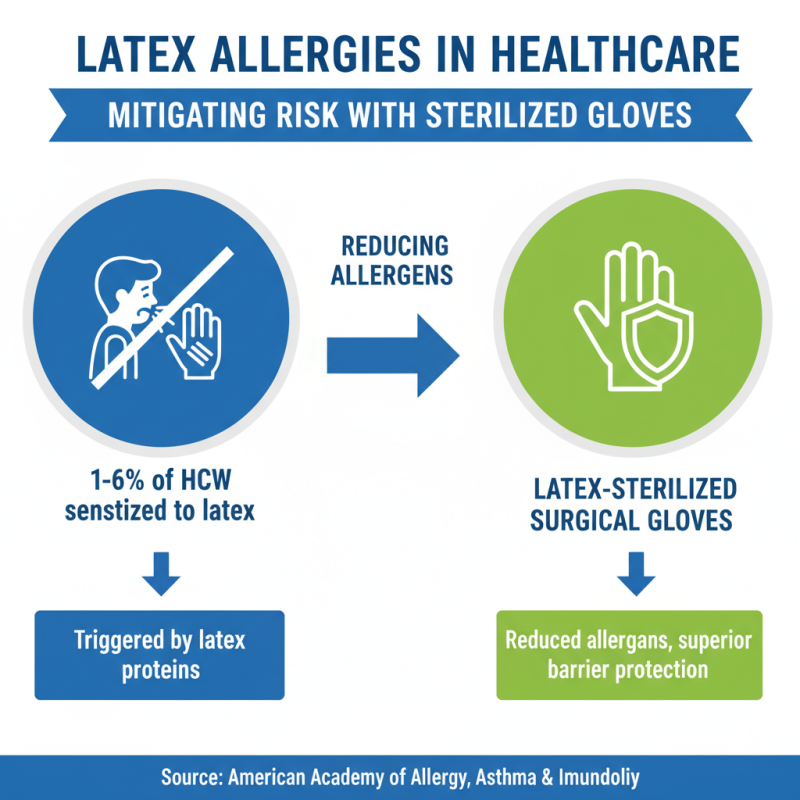
Latex allergies are a notable concern within the medical community, impacting both healthcare professionals and patients. A report from the American Academy of Allergy, Asthma & Immunology indicates that approximately 1% to 6% of healthcare workers experience latex sensitization, a condition triggered by exposure to latex proteins. Consequently, the need to reduce allergens in healthcare settings has become increasingly vital. This is where latex sterilized surgical gloves come into play, as they can help mitigate the risk of allergic reactions while still providing superior barrier protection.
The implementation of latex sterilized surgical gloves demonstrates a proactive approach to managing latex allergies. According to a review in the Journal of Occupational and Environmental Medicine, the use of powder-free latex gloves has been shown to significantly decrease the levels of airborne latex proteins, thus reducing the chance of allergic reactions. These gloves not only maintain the integrity needed for surgical procedures but also serve as a safer alternative in environments where exposure to latex allergens is a critical concern. By opting for these specially designed gloves, healthcare professionals can better safeguard their own health while also protecting patients who may be sensitive or allergic to latex, ultimately leading to improved overall care.
The cost-effectiveness of latex sterilized surgical gloves extends far beyond their initial purchase price. Healthcare professionals increasingly recognize that while the upfront costs may be higher compared to non-sterilized alternatives, the long-term benefits significantly outweigh these initial expenses. Latex sterilized gloves provide a crucial barrier against infections, reducing the risk of cross-contamination in clinical settings. This not only safeguards patient health but also diminishes the potential financial burden associated with hospital-acquired infections (HAIs). By minimizing the incidence of HAIs, healthcare facilities can save on treatment costs and resources, effectively making the investment in quality gloves a financially wise choice.
Moreover, the durability and reliability of latex sterilized gloves enhance their cost-effectiveness. These gloves are designed to withstand rigorous usage while maintaining their integrity, thus reducing the need for frequent replacements. This aspect is particularly important in busy healthcare environments where efficiency is paramount. When healthcare professionals can trust that their gloves will perform as intended, it leads to smoother workflows and less time spent managing equipment failures. As such, choosing high-quality sterilized gloves not only promotes better healthcare outcomes but also proves to be a sustainable and economical choice in the long run.
Latex surgical gloves have long been a staple in the healthcare industry, particularly due to their excellent barrier protection and tactile sensitivity. However, an increasingly important aspect of these gloves is their sustainability and biodegradability. According to a report by the World Health Organization, healthcare waste, including disposable gloves, accounts for up to 15% of the total waste generated by healthcare facilities. With millions of latex gloves used daily, the environmental impact is significant, leading to a push for more eco-friendly alternatives.
Recent studies have highlighted that latex gloves, made from natural rubber, can decompose within 6 months to 5 years under appropriate composting conditions, significantly outpacing synthetic alternatives such as nitrile and vinyl, which may take decades to break down. The Environmental Protection Agency suggests that prioritizing biodegradable options within the medical sector can contribute to minimizing landfill contributions and reducing the overall carbon footprint. In addition, the natural rubber industry promotes sustainable harvesting practices that support both environmental health and community livelihoods, reinforcing the message that latex surgical gloves not only serve a critical function in patient safety but also align with sustainable healthcare practices.
This bar chart illustrates the top 10 benefits of latex sterilized surgical gloves according to healthcare professionals. Each benefit is rated on a scale from 1 to 10 to indicate its importance in clinical settings.